When work feels slower than it should, the instinct is often to look for a single culprit: a person, a tool or a policy. In practice, everyday operations slow down for more ordinary reasons. Work waits in a queue. Information arrives incomplete. A decision needs one more approval. Finding these points is less about clever analysis and more about looking carefully at how work actually moves.
This article describes a straightforward way to identify process bottlenecks in day-to-day operations. It does not require specialized software, and it works for small teams as well as larger departments.
What a bottleneck really is
A bottleneck is any point in a process where work arrives faster than it can be handled. The result is accumulation: requests pile up, people wait, and everything downstream slows to the pace of that one step. The key idea is that a process can only move as fast as its most constrained step. Improving any other step may feel productive, but it rarely changes the overall result.
Bottlenecks are not always people or machines. They can be a shared inbox that only one person monitors, a monthly meeting where decisions are made, a form that must be completed before work can start, or an approval that depends on someone's calendar.
Start with one process and a clear boundary
Trying to examine "operations" as a whole usually produces a long list of frustrations and very little clarity. Choose one process that matters and define where it starts and ends. For example: "from the moment a customer request arrives to the moment we confirm it is complete." Clear boundaries make it possible to see the full path of the work and compare one case to another.
Good candidates are processes that are frequent, visible to customers or colleagues, or often described as "slow" or "messy." If a team regularly says "it depends who handles it," that is also a useful signal.
Observe the real process, not the documented one
Many organizations have a written procedure that no longer matches what people do. The written version is useful as a reference, but bottlenecks live in the real version. To see it:
- Follow a few recent cases end to end. Pick three to five examples and trace what happened, step by step, using emails, tickets, files or conversations.
- Talk to the people doing the work. Ask what they wait for, what they check twice, and what they do when something is missing.
- Note every handoff. Each time work passes from one person, team or system to another, mark it. Handoffs are where delays and misunderstandings tend to concentrate.
- Record waiting separately from working. A task may take twenty minutes of effort but sit for three days before anyone touches it. That gap is usually more important than the effort itself.
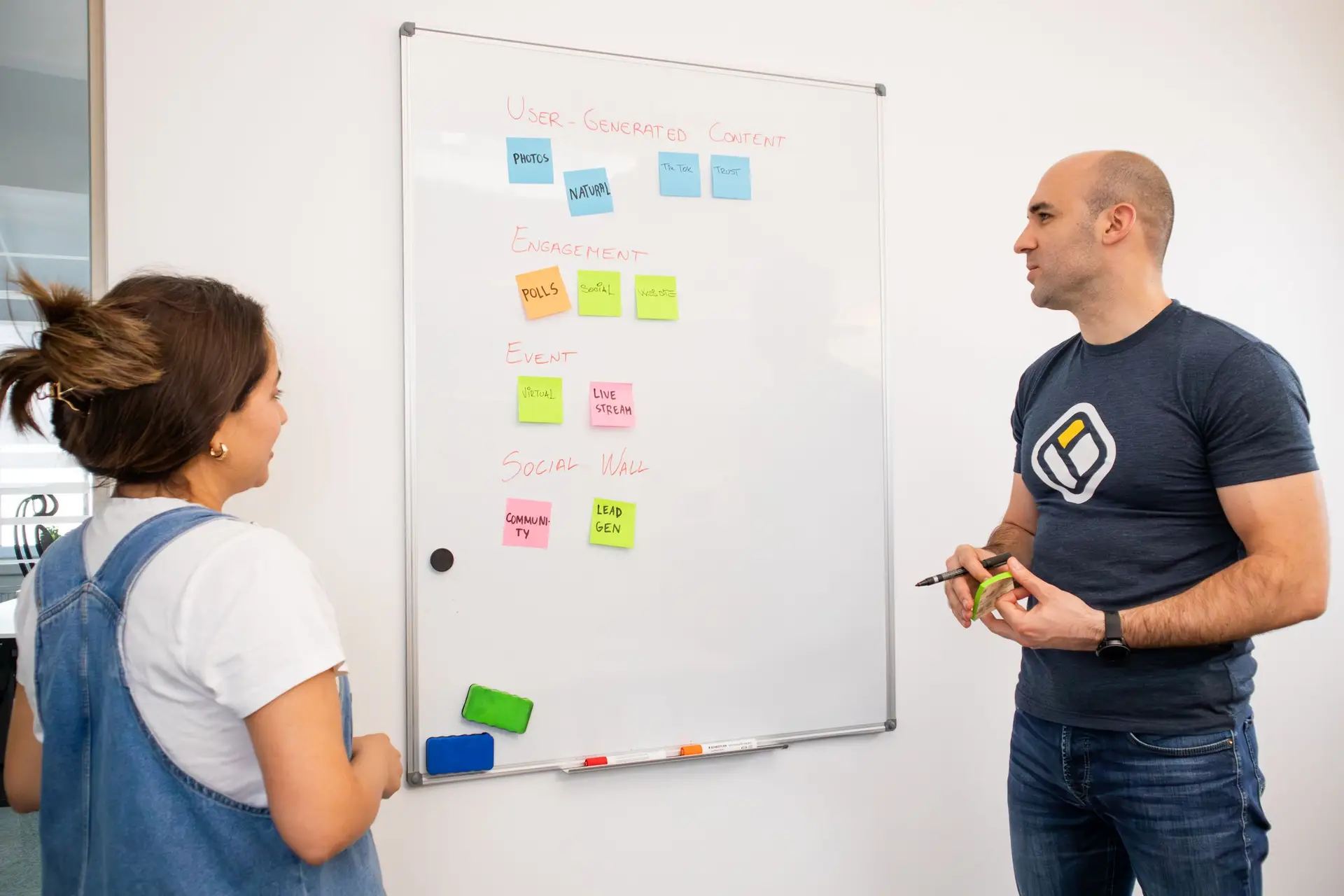
A simple sketch on paper or a whiteboard is enough. Boxes for steps, arrows for handoffs, and a note of where work tends to wait.
Common signs of a bottleneck
Once the real process is visible, look for these patterns:
- Queues. Work regularly piles up before a particular step or person.
- Idle time downstream. People after a certain step often have nothing to do, then suddenly have too much.
- Rework loops. Work is frequently sent back because something was missing or unclear.
- Single points of dependency. Only one person knows how to do something, or only one person can approve it.
- Workarounds. People keep personal spreadsheets, side lists or reminders to compensate for a gap in the process.
- Batching. Work is held until there is "enough" of it, or until a weekly or monthly cycle comes around.
- Unclear status. Nobody can easily say where a given request is or who has it now.
The step that everyone complains about is not always the bottleneck. Sometimes it is simply where the delay becomes visible.
Confirm the cause before changing anything
It is tempting to fix the first obvious problem. A more reliable approach is to confirm the cause with a little evidence. For a suspected bottleneck, ask:
- Does work consistently wait here, or only occasionally?
- Is the delay caused by capacity, missing information, unclear responsibility, or a rule that requires something to happen first?
- If this step were faster tomorrow, would the overall process actually speed up, or would work simply wait somewhere else?
The third question is especially useful. If speeding up a step would only move the queue further down the line, the real constraint is elsewhere.
Light measurement helps. Even a two-week log of when requests arrive, when they start and when they finish at each stage can show patterns that conversation alone may miss. Measurement does not need to be precise to be useful; it needs to be consistent.
Typical causes and practical responses
| Underlying cause | What it looks like | Possible response |
|---|---|---|
| Incomplete inputs | Work is returned for missing details | Clarify what "ready to start" means; use a short checklist or structured intake |
| Concentrated approvals | Requests wait for one decision-maker | Define thresholds where approval is not needed; name a backup |
| Unclear ownership | Tasks sit between teams | Assign one accountable owner per stage; document handoff points |
| Knowledge held by one person | Work stops when someone is away | Document the steps; cross-train at least one other person |
| Tool friction | Re-entering the same data in several places | Review where information is duplicated before choosing any new tool |
Notice that most responses are organizational rather than technical. New software can help, but it tends to work best after the process itself has been clarified.
Keep the improvement small and testable
Once the most significant bottleneck is clear, change one thing and observe the effect for a defined period. Small, reversible adjustments are easier to agree on and easier to evaluate. If the change works, document it so it becomes the new normal rather than a temporary habit. If it does not, the team has learned something specific about the process at a low cost.
After the first constraint is relieved, another one will often become visible. That is expected. Bottleneck work is iterative: each round makes the process a little clearer and a little easier to manage.
A short checklist
- Choose one process and define its start and end.
- Trace several real cases end to end.
- Mark every handoff and every point where work waits.
- Look for queues, rework, single dependencies and workarounds.
- Confirm the cause with simple evidence before acting.
- Make one small, testable change and document the result.
If your team would like an outside perspective on a specific process, Firmavexa's Operational Improvement service is designed around exactly this kind of structured review.